Household chores can feel endless. The truth is, many of the tasks we think we “should” do every day are not actually necessary. Some habits come from older advice, while others are simply social expectations that stuck around.
The good news is that a lot of these chores can be skipped without causing problems. In some cases, doing them less often can even save money, protect your health, or make things last longer.
Here are ten common household chores you can safely skip, and why letting them go is completely okay. PS If you like the idea of cutting unnecessary effort from daily life, you might also enjoy my guide on decluttering your home effortlessly one item at a time, which focuses on small, low stress changes that make life easier.
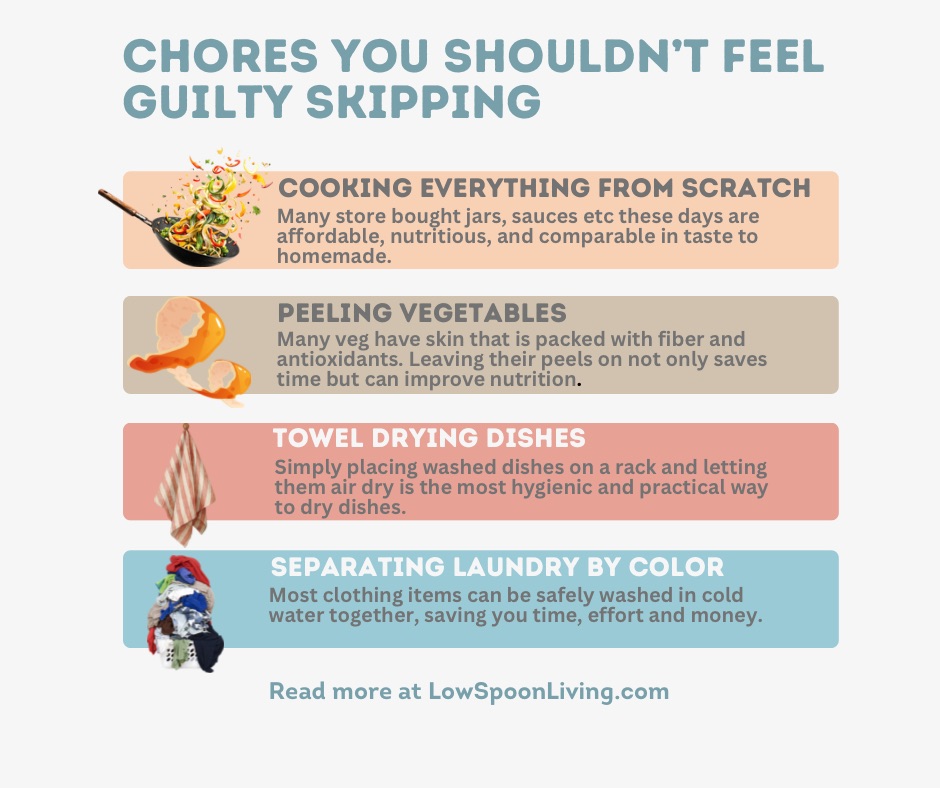
Cooking Everything “from Scratch”
There is nothing wrong with taking shortcuts in the kitchen – even professional chefs do it. I am sure I’ve heard Rick Stein mention that life is too short to be making puff pastry from scratch (or something along those lines anyway). You don’t have to create every single component yourself to have a healthy, delicious meal. Sauces from jars, ready made stocks and other convenience items are perfectly fine to use. Store-bought options these days are often affordable, nutritious, and comparable in taste to homemade . So be guilt free about using that jar of sauce, you’ll still get a good meal, and you’ll free up time and reduce stress on busy days.
Chopping Vegetables
You can absolutely skip the chopping and use frozen, canned, or precut veggies without guilt. Nutritionally, frozen vegetables are on par with fresh – sometimes even more nutritious – because they’re flash frozen at their peak. Research shows frozen produce retains vitamins as well as, or occasionally better than, fresh produce which can lose nutrients when sitting for days in transport or storage (or the back of your fridge!). Canned vegetables are also a good option; the canning process has minimal effect on minerals and fiber, and let’s face it, soaking beans overnight is not on anyone’s list of priorities. You’ll also cut down on food waste, since frozen/canned have long shelf lives . In short, skipping the chopping is perfectly fine and can help you cook more nutrition packed meals with less effort. Besides nutrition, using precut veggies is a huge time and effort saver. You can just toss them into your dish, making it easier to hit your daily veggie quota without all the prep work .
Peeling Vegetables
Put down the peeler – for many vegetables, the skin is not only edible but packed with nutrients. Peeling can strip away vitamins, minerals, and fiber that are concentrated in the outer layer of produce . For example, a potato cooked with its skin on has more vitamin C, more potassium, and more folate and magnesium compared to a peeled potato . Similarly, apple skin contains hefty portions of vitamins and antioxidants that you’d lose if you peeled it. In fact, up to one third of a veggie’s fiber and many antioxidants reside in the skin or peel . By skipping the peeling, you not only save prep time but also get a nutritional boost (just be sure to wash produce thoroughly). Unless the skin is inedible or too tough or the texture is difficult for you to handle, you’re usually better off not peeling. You’ll enjoy more vitamins and fiber, reduce food waste, and spend less time on this unnecessary chore.
Washing Hair Daily
Washing your hair every single day is usually unnecessary and may even be detrimental to hair health. Dermatologists generally recommend shampooing only about 2–3 times per week for most hair types . Over washing strips your scalp’s natural oils, which can leave hair dry, frizzy, or prone to breakage. Hair experts agree that for the majority of people, daily washing is unnecessary – it can dry out hair and cause damage like split ends over time . Skipping daily shampoos lets your hair’s natural oils condition the strands, leading to shinier, healthier hair. Of course, adjust to your hair type (fine hair might need more frequent washes than coarse or curly hair), but in general it’s perfectly okay – even beneficial – to skip the daily hair-wash routine . Your hair will thank you for the break!
Washing Clothes After Every Wear
Many clothing items do not need to be washed after a single wear, and over-washing can actually shorten their life. Unless a garment is visibly dirty, stained, or sweaty/smelly, you can wear it again by simply airing it out or spot cleaning as needed . In fact, washing clothes too often can fade colors, wear out fibers – effectively wearing out your wardrobe faster . Cutting back on unnecessary laundering keeps your clothes looking newer longer. Jeans are a prime example: Levi’s CEO made headlines by revealing he never washes his jeans unless absolutely necessary. Washing clothes less often saves water, reduces your power bill and makes the clothes last longer . So feel free to re-wear those jeans, sweaters, and jackets a few times. (Of course, certain items like sweaty gym clothes are a different story, those should be washed after one use!)
Towel Drying Dishes
It’s perfectly okay to skip manually drying dishes with a towel, in fact, air drying your dishes is often the better method. Experts recommend simply placing washed dishes on a rack and letting them air dry, as this is most hygienic and practical . Towel drying can introduce germs if the towel isn’t perfectly clean. A damp dish towel used repeatedly can harbor bacteria and actually re-contaminate your clean dishes during drying. If you’re in a hurry and must use a towel, experts say to use a fresh, clean microfiber towel and launder dish towels frequently. But otherwise, save yourself the effort, skip the towel and let your dishes drip dry. It saves time and is actually more sanitary.
Ironing Clothes
Ironing is a classic chore that you can often bypass especially with a few tricks. Many wrinkles will smooth out on their own if you hang or fold clothes properly. You can use a wrinkle release spray for any stubborn creases . Quitting ironing saves hours each week, and as a bonus, clothes last longer since they aren’t exposed to high heat all the time . For those items that do need de-wrinkling, consider a garment steamer. Much quicker than setting up an ironing board. The reality is that many of us now wear casual or wrinkle resistant fabrics daily, and slight wrinkles are not the end of the world. Unless you need a crisp, formal press on something, it’s usually fine (and freeing!) to skip ironing. Your wardrobe won’t suffer, and you reclaim that time and storage space (goodbye ironing board!).
Making the Bed
Believe it or not, making your bed first thing in the morning is not really necessary – and leaving it unmade for a while might even be healthier. Dust mites, which are microscopic allergens, thrive in moist, warm environments like a tucked in bed. Letting your bed linens air out can dry up the moisture from your sweat or breath and make it harder for dust mites to survive. A British study found that an unmade bed had conditions less friendly to dust mites, potentially reducing their numbers. So skipping the immediate bed making is okay – your mattress and sheets actually get to breathe. At the end of the day, it’s a personal preference: a neatly made bed looks tidy, but an unmade bed airing out during the day might be a bit more hygienic (especially for allergy sufferers). If you hate making the bed, you have a great excuse to skip it or do a very minimal straighten up. You’ll save a few minutes each morning, and according to that research, you might sleep in a bed with fewer dust mites – not bad for a “messy” bed!
Sorting Laundry by Color
Sorting clothes by color used to be standard, but it isn’t always necessary anymore with today’s detergents and washers. Many people now wash all colors together in cold water without issues – this prevents dye bleed and saves time . Using color-catcher sheets in the wash can also trap any loose dyes. Unless you have brand new, highly dye saturated garments, you can usually skip the tedious color separation step.
Disinfecting Everything
You do not need to disinfect every surface of your home. In fact, the CDC advises that unless someone is very sick in your home, routine cleaning (with soap and water) is enough. Too much disinfecting can backfire: scientists warn that overuse of strong disinfectants can contribute to health problems and antimicrobial resistant germs . Frequent use of certain disinfectant chemicals can also irritate lungs/skin and harm the environment. The bottom line: regular cleaning is fine, only disinfect high touch areas, especially where food is involved, or when needed (e.g. raw chicken on the counter, someone is ill). Skipping the “disinfect everything” routine saves time and avoids unnecessary chemical exposure.



Leave a Reply